
Titanium vs Wood vs Plastic vs Bamboo Cutting Boards: Which Is Best?
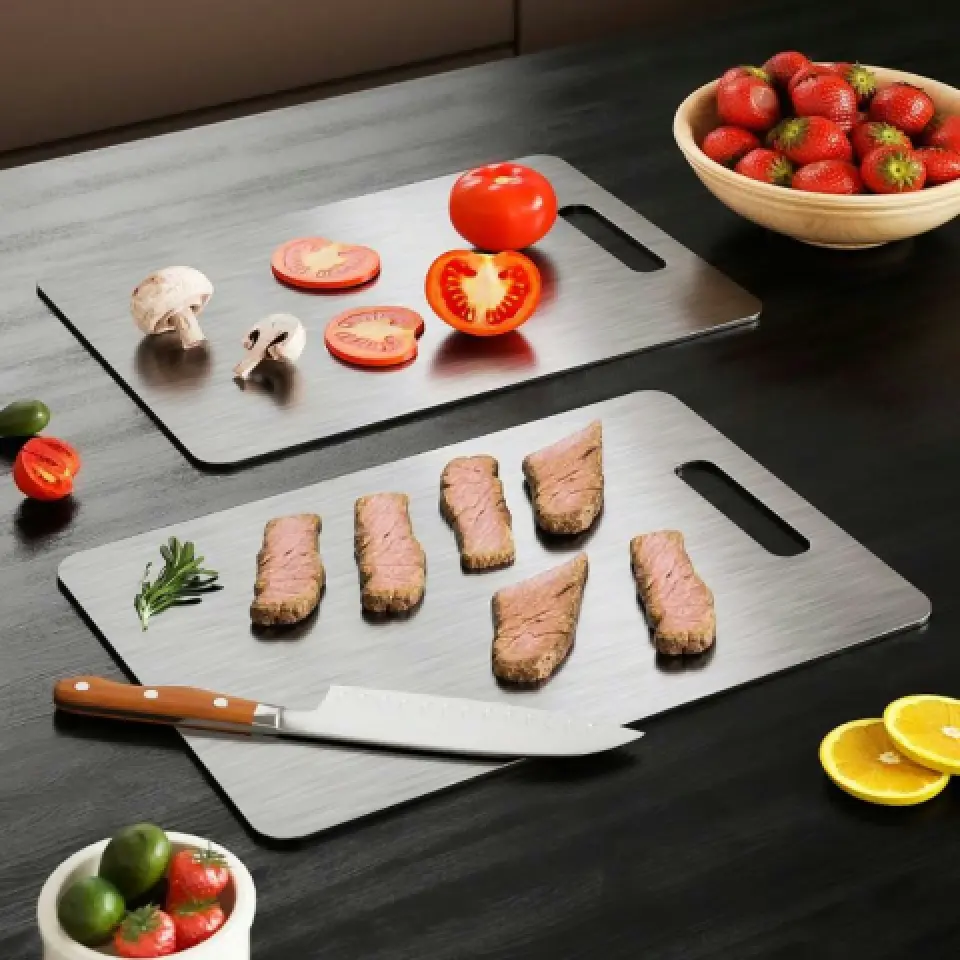
The cutting board is the workhorse of every kitchen, yet most people never think twice about the material. That's a mistake — the material decides how long your knives stay sharp, how often you replace the board, and how much bacteria and microplastics end up near your food.
We spent weeks testing the four most common materials — titanium, wood, plastic, and bamboo — on hygiene, knife wear, durability, and ease of cleaning. Here's the honest breakdown, and the one we'd buy for our own kitchen.
The Short Answer
Titanium wins on hygiene, longevity, and ease of cleaning. Wood and bamboo win on knife feel but need constant maintenance and absorb odors. Plastic is cheap but grooved boards trap bacteria and shed microplastics. Glass and stone are excluded here because they destroy knife edges and chip easily.
Head-to-Head Comparison
| Criterion | Titanium | Wood | Plastic | Bamboo |
|---|---|---|---|---|
| Hygiene / non-porous | Excellent | Poor (absorbs) | Medium (grooves) | Poor (porous) |
| Odor & stain resistance | Excellent | Poor | Medium | Poor |
| Knife friendliness | Good | Excellent | Good | Excellent |
| Microplastics | None | None | Sheds over time | None |
| Durability | Excellent | Warps/cracks | Replaces often | Cracks without oil |
| Maintenance | Rinse & wipe | Oil regularly | Washing | Oil regularly |
| Dishwasher safe | Yes | No | Top rack | No |
| Price range | $$–$$$ | $–$$ | $ | $–$$ |
Titanium: The Hygiene Champion
Titanium cutting boards are made from a non-porous metal surface. Because there are no pores or grooves, bacteria, juices, and oils have nowhere to soak in. This is the material's biggest advantage: you can rinse it, wipe it, and move on in seconds — no scrubbing garlic smells out of wood grain, no bleaching stained plastic.
Titanium is also a much softer metal than glass or stone, which is why it doesn't destroy your knives the way a glass board does. And because it's metal, it's essentially indestructible in normal kitchen use — it won't warp, crack, or need replacing every couple of years.
Our pick: the Katori titanium cutting board — a double-sided design that lets you use one face for raw food and the other for cooked. Read our full review here.
Wood: The Knife's Best Friend
End-grain wood boards are legendary among chefs for a reason: the soft grain opens and closes around your knife blade, which keeps edges sharp longer than almost any other material. Nothing beats the feel of a well-maintained wood board under a chef's knife.
The downsides are real, though. Wood is porous, so it absorbs juices, odors, and stains. It must be hand-washed and oiled regularly, or it will dry out and crack. Over time, even well-cared-for wood boards develop knife grooves that trap bacteria — a problem no amount of cleaning fully solves.
Plastic: Cheap, but Problematic
Plastic boards are cheap and easy to sanitize in a dishwasher, which is why restaurants use color-coded ones for raw meat. But every time you cut on plastic, the knife carves tiny grooves into the surface. Those grooves trap bacteria that survive washing, and they slowly shed microplastic particles into your food.
You can mitigate this by replacing grooved plastic boards often — but most people don't. A board that's visibly cut up and scratched is the clearest sign it's time to go. See the full science on plastic boards and microplastics here.
Rule of thumb: if your plastic board has visible knife grooves, replace it. Grooves are bacteria hotels.
Bamboo: Eco-Friendly but Porous
Bamboo is often marketed as the "green" alternative to wood. It's harder than most wood boards, which makes it durable, but that hardness is also a mild downside — it's slightly less forgiving on knife edges than end-grain wood.
Like wood, bamboo is porous. It absorbs odors and stains, needs regular mineral-oil conditioning, and can crack or split if you let it dry out. It's a solid budget choice, but it shares wood's maintenance burden without wood's premium knife feel.
Which Should You Buy?
Buy titanium if you want:
- ✔ Zero odor, zero stains, zero bacteria worries
- ✔ A board you never have to oil or replace
- ✔ A board that can handle raw meat and cooked food side by side
- ✔ An end to microplastic worries from plastic boards
Buy wood or bamboo if you:
- ✔ Are a home cook who loves the feel of a chef's knife
- ✔ Don't mind regular oiling and hand-washing
- ✔ Want a large prep surface for serious cooking
- ✔ Prefer a traditional, natural-looking board
The practical sweet spot for most kitchens? A titanium board for everyday prep and raw proteins (the hygiene-critical stuff), plus a large wood board if you love the chopping feel for vegetables. Many people who switch to titanium end up retiring their plastic boards entirely.
Related Reading
- Does titanium dull your knives? We tested it.
- How to clean and care for a titanium cutting board
- Are plastic cutting boards putting microplastics in your food?
- Katori titanium cutting board — full review
FAQ
Q: Which cutting board material is the most hygienic?
Q: Do titanium cutting boards dull knives?
Q: Are plastic cutting boards safe to use?
Q: Is bamboo better than plastic for cutting boards?
Q: How long does a titanium cutting board last?
Ready to Upgrade Your Board?
The double-sided titanium board we reviewed cleans in seconds and never absorbs odors. See today's price and discount below.
👉 Check Today's Price