
Are Plastic Cutting Boards Putting Microplastics in Your Food?
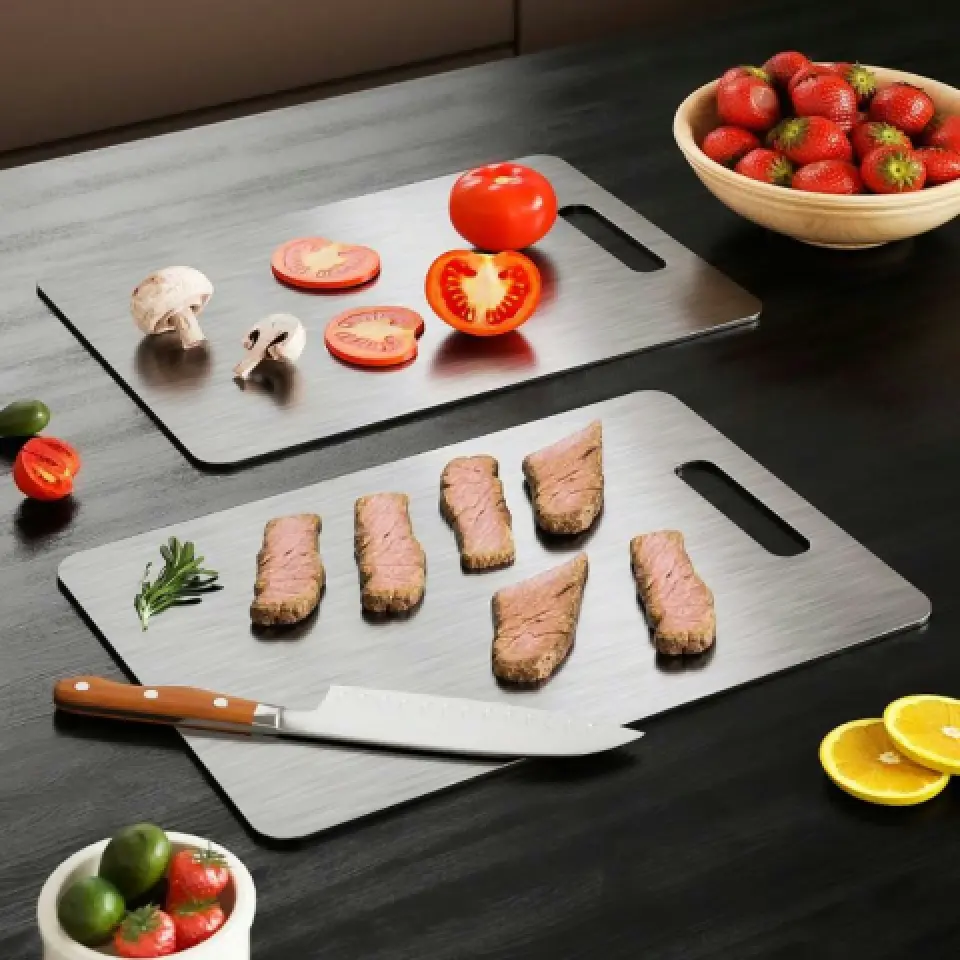
Microplastics are everywhere — in the ocean, in the air, and increasingly, in our food. One source that gets surprisingly little attention sits right on the kitchen counter: the humble plastic cutting board.
The short version: yes, cutting on plastic sheds microplastic particles into your food. Here's what the research shows, how much it actually matters, and what to use instead.
The Short Answer
Yes. Peer-reviewed studies have shown that a single knife cut on a plastic board can release thousands of microplastic particles into food. The older and more grooved the board, the more it sheds. It's one of the most direct, controllable ways plastic ends up in your diet.
What the Science Says
In 2023, a widely reported study in the journal Environmental Science & Technology measured microplastics released from plastic cutting boards during normal chopping. Researchers found that hundreds to thousands of tiny particles were shed per cut, with the volume driven by the number of cuts and the depth of existing knife grooves.
Key takeaways from the research:
- Cutting on plastic releases microplastics and nanoplastics directly into food.
- A heavily grooved board sheds dramatically more than a smooth one.
- Different plastics release at different rates; softer boards tend to shed more.
- Microplastics are indigestible — they pass through the body, but research on long-term health effects is still ongoing.
The honest framing: the exact health impact of ingested microplastics isn't fully settled science. But the principle is simple — if you can easily reduce a source of plastic in your food, why wouldn't you?
Why Grooves Make It Worse
A new plastic board is smooth. As you cut, the knife carves tiny grooves into the surface. Each groove becomes a collection point for food and bacteria — and every future cut grinds against those ragged edges, releasing more particles.
This is why the "replace your grooved plastic board" advice exists in restaurant and food-safety guidelines. But most home cooks keep the same scratched board for years. That's precisely when shedding is at its worst.
If you keep one thing from this article: throw out plastic boards that are visibly cut up and scratched. They're shedding the most microplastics and are the hardest to clean.
The Best Alternatives (Zero Microplastics)
Any non-plastic material eliminates the microplastic problem entirely:
| Material | Microplastics | Odor/Stain | Maintenance |
|---|---|---|---|
| Titanium | None | None | Rinse & wipe |
| Wood | None | Absorbs | Oiling |
| Bamboo | None | Absorbs | Oiling |
| Plastic | Yes, with use | Medium | Easy (dishwasher) |
Titanium is the standout if you want zero microplastics and zero odor and stain problems. Because it's non-porous metal, there are no grooves to trap bacteria and nothing to absorb — the two issues that make wood and plastic less appealing.
Our recommendation: the Katori titanium cutting board eliminates microplastics entirely while staying easy to clean. Read the full review. Or compare every material in our titanium vs. wood vs. plastic vs. bamboo guide.
Related Reading
- Titanium vs wood vs plastic vs bamboo cutting boards
- How to clean and care for a titanium cutting board
- Does titanium dull your knives?
- Katori titanium cutting board — full review
FAQ
Q: Do plastic cutting boards release microplastics into food?
Q: Is it safe to keep using a plastic cutting board?
Q: What is the best cutting board to avoid microplastics?
Q: Do wood cutting boards shed microplastics?
Q: How can I tell if my plastic board needs replacing?
Switch to a Microplastic-Free Board
The titanium board we reviewed produces zero microplastics, never absorbs odors, and cleans in seconds. See today's price below.
👉 Check Today's Price